
Chapter 1 cont’d
So successful were the Irish Priests in preserving this culture that they subsequently spread out to the rest of Europe and restored the classical learning, and many of the classical books, that otherwise would have vanished from the West. For example, St. Columba sailed from Ireland to the island of Iona in 563 and established the great monastic community there. As early as the 8th century, the Anglo-Saxon historian, “the Venerable Bede,” wrote: “At that time there were many of the English nation, both of noble and of lesser rank, who, whether for divine study or to lead a more continent life, had left their native land and had withdrawn to Ireland. Certain among them gave themselves up willingly to the monastic way of life, while others rather went about from cell to cell of the teachers and took pleasure in cultivating study. And all these the Irish most freely received, and made it their study to provide them with food from day to day without any charge, with books to read and with free teaching.” This has led to the idea that the Irish “saved western civilization,” a concept that has much truth, considered in a broad sense.
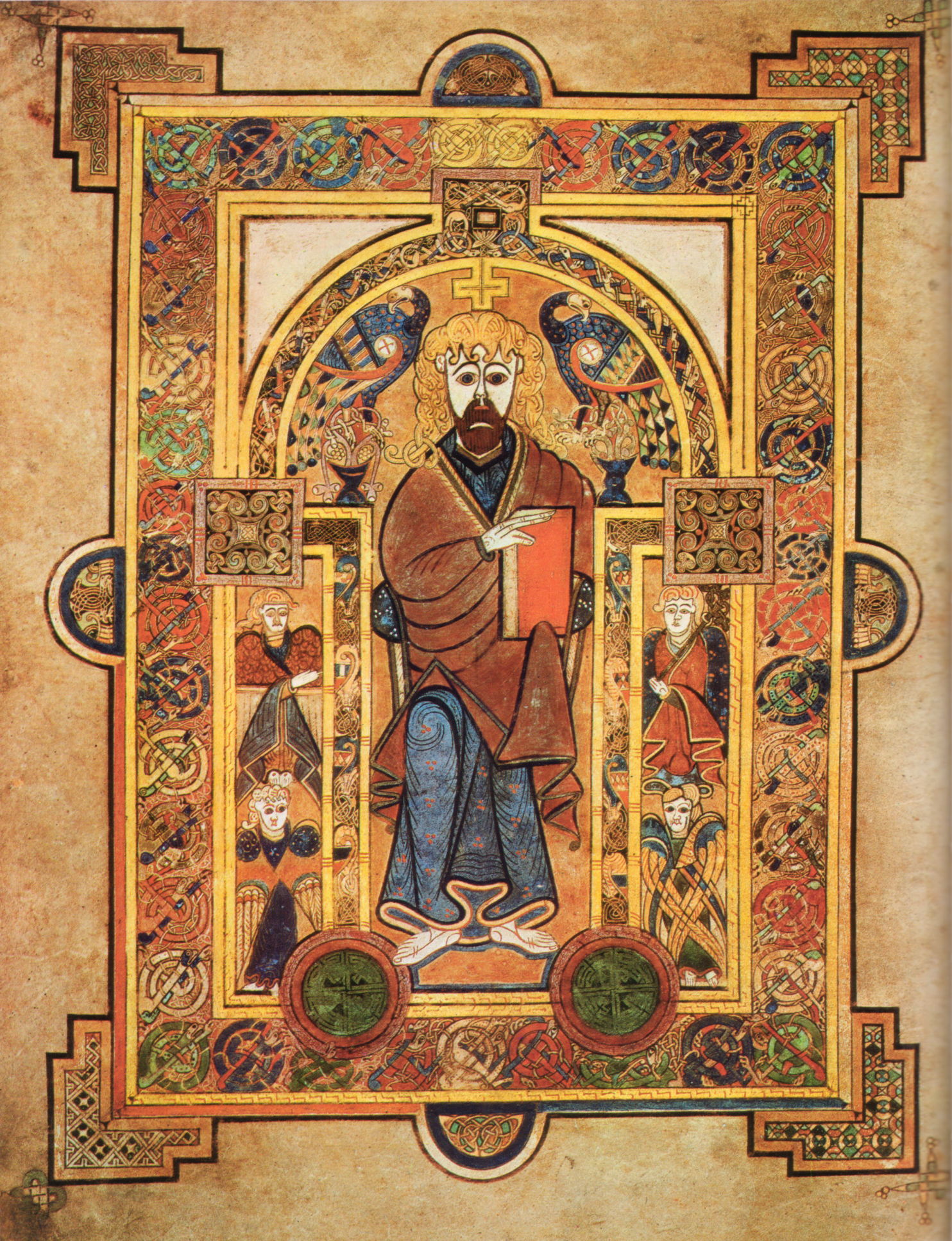
The earliest Irish poetry comes from this period, and from the hands of the very monks and scribes who were laboriously copying the Classics. Often scribbled in the margins of a scholarly text, these early poems–the oldest vernacular poetry in all European literature (preceding Chaucer by as much as 7 centuries)–are marked by a tension between the Christian, or orthodox, belief, and the pagan, or unorthodox, belief, a tension that will continue in Irish writing all the way into the 21st century. Often the monks would rhapsodize about the beauty of the natural world that surrounded them (as in “The Hermit Marban” or “First of summer, lovely sight!”); other poems seek to reconcile the poet to the doctrines of the Christian faith (“Eve am I, great Adam’s wife” or “I’m ashamed of my thoughts”). The New Oxford Book of Irish Verse is a rich collection of this ancient Irish poetry in English translation. For a good range of this monastic poetry, read the four poems below. Pay particular attention to the clear sense of the loneliness of the monks, their wonder at nature, and their desire to express something of their lives and observations: “All alone in my little cell” (p.28), “Pangur Ban” (p.31), “First of summer, lovely sight” (p.38), and “The wind is wild tonight” (p.44).